
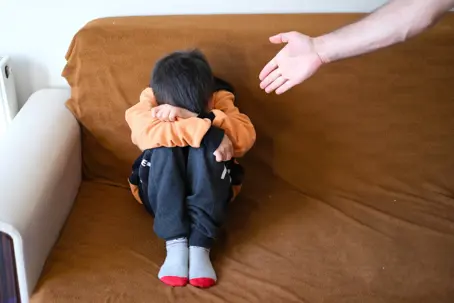
Effective July 1, 2026, Iowa's child endangerment law is changing so that a parent or guardian can be convicted of child endangerment involving any child under the age of eighteen. Previously, the law required the child to be under the age of fourteen.
A good chunk of child endangerment charges involve parents or guardians being charged under Iowa Code Section 726.6(1)(a), an aggravated misdemeanor. This section states, in pertinent part:
- A person who is the parent, guardian, or person having custody or control over a child or a minor under the age of eighteen with a mental or physical disability, or a person who is a member of the household in which a child or such a minor resides, commits child endangerment when the person does any of the following:
a. Knowingly acts in a manner that creates a substantial risk to a child's physical, mental, or emotional health or safety.
What is a "substantial risk," you ask? I am not exactly sure, other than that it is not an "ordinary risk." I believe the legislature has left this law somewhat up in the air and subject to prosecutors' discretion when deciding whether to charge the crime.
We recently received a little help from our Supreme Court in State v. Cole, 3 N.W.3d 200 (Iowa 2024). The court in Cole stated that a mother who left her five children, ranging in age from 5 to 12, did not create a "substantial risk" when she left them home alone while she went to a local Walmart to get groceries. It is unclear how long the mother was actually gone from the apartment, but it appears she was away for at least an hour. Interestingly, the ten-year-old child was autistic, although the record was not clear regarding the care the child required.
The court also provided several hypotheticals that it suggested would not constitute child endangerment, including:
- The risks associated with a child climbing on equipment, such as a jungle gym at a park;
- The risks associated with a child playing freely in the neighborhood without continual adult supervision;
- The risks associated with giving your child a vaccine;
- The risks associated with playing sports, such as high school football;
- The risks associated with allowing your child to ride a bike or walk to school despite the possibility of stranger abduction (to put this in perspective, one commentator observed that, statistically, someone who wanted a child to be abducted would have to leave the child outside for 500,000 years before it could reasonably be expected to happen);
- The risks associated with driving to school or work; and
- Children riding in the back of a pickup truck (with no debris in it and with a properly functioning tailgate).
The court then stated that a parent "creates" a substantial risk when one of the following is true:
- The parent's behavior is independently unlawful;
- The parent's behavior is overtly abusive; or
- The parent's behavior creates an identifiable risk that falls clearly outside the risks of ordinary life.
A case, State v. Gibbs, decided by our Supreme Court last week (June 12, 2026), involved a mother who left her three children, ages 4, 7, and 9, at home while she was gone for approximately five hours. The seven-year-old child had special needs. He was non-verbal, required a feeding tube, and needed diaper changes and nose suctioning.
The court found that the mother should be convicted of child endangerment. Although it appears the court had no issue with leaving a healthy nine-year-old home alone, and perhaps even leaving a healthy four-year-old home with the nine-year-old, it took issue with leaving those children in the care of a seven-year-old child with significant special needs.
As stated above in Cole, an aggravated misdemeanor child endangerment conviction requires one of the following: (1) unlawful behavior by the parent; (2) overtly abusive behavior by the parent; or (3) an identifiable risk that falls clearly outside the risks of ordinary life.
It is fairly clear that the court relied on factors one and three. The prosecutor was clever and charged the mother with neglect under Iowa Code Section 726.3, even though it is essentially child endangerment as an aggravated misdemeanor, except that the State must show the child was exposed to a danger or hazard from which the child could not protect himself or herself.
Based on the opinion, the child required significant care and realistically could not be left alone for five hours. The court also speculated that the four-year-old and nine-year-old could suffer emotional distress if the seven-year-old experienced medical issues while their mother was away.
It is hard for me to wrap my head around some portions of the opinion, but it is clear that a prosecutor may rely on speculation to obtain a conviction when someone is realistically at risk of experiencing a health emergency. It is certainly understandable how the court reached its decision regarding the seven-year-old because the child's life was arguably at risk. Simply put, this child needed supervision, and it was not present in Gibbs.
The court made clear in Gibbs that a dependent person who cannot fend for himself or herself must be continuously supervised by an adult (or at least someone older than nine years old).
It appears that our court is comfortable with parents leaving children home alone so long as they are healthy, can fend for themselves, and are at least nine years old.
As the above discussion shows, Iowa's child endangerment law remains somewhat unclear regarding what exactly constitutes child endangerment in the State of Iowa. If you have any questions regarding Iowa's child endangerment law, do not hesitate to reach out to one of our child endangerment defense lawyers at Ben Feld Law Firm.